
$200 BBD
60 minutes
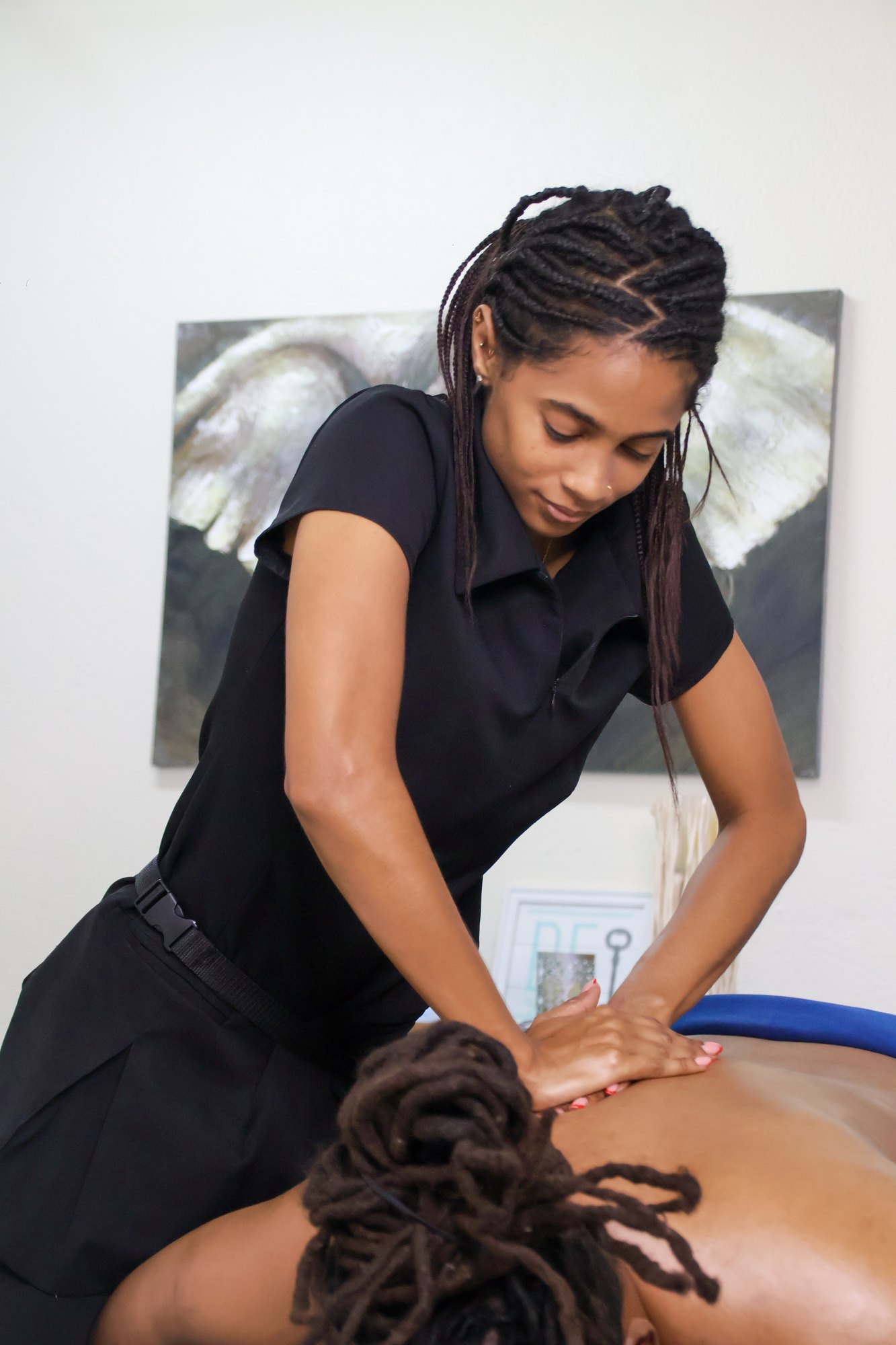
When your shoulders, back, or other areas feel persistently tight and you prefer firmer pressure, deep tissue massage at KiWest Spa in Belleville, Bridgetown offers slow, focused work on the areas you select. Pressure is adjusted throughout the appointment to stay within your comfort.
This option suits active clients, desk workers, frequent travellers, and anyone who wants more targeted pressure than a relaxation massage. Massage supports comfort and relaxation but does not diagnose, treat, or rehabilitate an injury or medical condition.
What is Deep Tissue Massage?
Deep tissue massage is a specialized therapeutic technique that targets the inner layers of muscles, tendons, and fascia (the connective tissue surrounding muscles). Unlike Swedish massage that focuses on relaxation through flowing, gentle strokes, deep tissue massage uses slow, deliberate pressure and specific friction techniques to reach troubled areas deep beneath the surface.
The goal is focused muscular work, not maximum pressure. Your therapist works slowly on selected areas and checks your comfort, while you remain free to request lighter pressure, firmer pressure, or a change of focus.
Deep Tissue Techniques
- Stripping: Deep, gliding pressure along the length of muscle fibers using forearms, knuckles, or elbows to release deep tension
- Friction: Pressure applied across the grain of muscles to break up adhesions and realign tissue fibers
- Trigger Point Therapy: Sustained pressure on specific points of muscle tension to deactivate trigger points and release referred pain
- Myofascial Release: Stretching and manipulating fascia to restore mobility and reduce restriction
- Cross-Fiber Friction: Focused pressure applied across a selected area of muscular tension
Benefits of Deep Tissue Massage
Deep tissue massage delivers powerful therapeutic benefits that go far beyond relaxation:
- Focused muscular comfort: Concentrates time on the back, neck, shoulders, legs, or another agreed focus area
- Firmer pressure: A practical choice when you prefer more targeted work than a relaxation massage
- Releases Muscle Knots: Deactivates trigger points-those stubborn knots that cause local pain and referred pain in other areas
- Improves Range of Motion: Restores flexibility and mobility by releasing tight muscles and adhesions that limit movement
- Adjustable treatment: Pressure can be changed at any time and should never feel sharp or unbearable
- Post-work or travel reset: Useful after long periods of sitting, standing, training, or carrying luggage
- Clear communication: You decide which areas receive attention and which should be avoided
- Treats Postural Problems: Addresses muscle imbalances caused by poor posture, desk work, or repetitive activities
- Manages Arthritis: Reduces stiffness and pain associated with osteoarthritis and other joint conditions
- Alleviates Sciatica: Releases piriformis muscle tension that compresses the sciatic nerve
Conditions Deep Tissue Massage Treats
Deep tissue massage is specifically therapeutic for:
- Chronic Lower Back Pain: One of the most effective non-pharmaceutical treatments for chronic back pain
- Neck and Shoulder Tension: Releases the upper trapezius and levator scapulae muscles that create stubborn shoulder and neck knots
- Plantar Fasciitis: Reduces heel and foot pain by releasing tight calf muscles and plantar fascia
- Tennis Elbow (Lateral Epicondylitis): Treats chronic forearm and elbow pain from repetitive gripping motions
- Carpal Tunnel Syndrome: Releases forearm muscles that compress the median nerve
- Sciatica: Addresses piriformis syndrome-tight hip muscles that irritate the sciatic nerve
- Fibromyalgia: Reduces widespread pain and improves quality of life in fibromyalgia patients
- Active lifestyles: Firmer massage for clients who train, exercise, or do physical work
- Postural Dysfunction: Corrects muscle imbalances from sitting at computers, driving, or repetitive work
- Limited Range of Motion: Restores mobility lost to tight muscles and adhesions
What to Expect During Deep Tissue Massage
Your 60-minute therapeutic session at KiWest Spa follows a systematic approach to identify and treat problem areas:
Initial Assessment (10 minutes)
- Detailed discussion of pain locations, intensity, and history
- Movement assessment to identify restrictions and compensations
- Palpation (hands-on examination) to locate trigger points and adhesions
- Discussion of pressure tolerance and treatment goals
- Review of medical history, injuries, and contraindications
Treatment Session (45 minutes)
- Warm-Up (5 minutes): Begins with lighter Swedish techniques to warm superficial tissues and prepare muscles for deeper work
- Focused Deep Work (35 minutes): Concentrated attention on problem areas using slow, deep strokes, trigger point therapy, and myofascial techniques. Your therapist uses forearms, knuckles, and elbows to access deep tissue layers
- Secondary Areas (5 minutes): Addresses compensatory tension in related areas (for example, treating hip muscles when addressing lower back pain)
Post-Treatment (5 minutes)
- Gentle strokes to help nervous system transition
- Discussion of treatment findings and home care recommendations
- Stretching and self-care advice
- Hydration (water provided)
- Scheduling follow-up treatment if needed
Deep Tissue vs. Swedish Massage: Key Differences
Many people confuse deep tissue and Swedish massage. Here's the critical distinction:
Swedish Massage
- Goal: Full-body relaxation and stress relief
- Pressure: Light to moderate
- Technique: Long, flowing strokes
- Focus: Entire body, all muscle groups
- Pace: Rhythmic, continuous
- Best For: General wellness, stress reduction, first-time massage clients
Deep Tissue Massage
- Goal: Treat specific pain and dysfunction
- Pressure: Firm to intense (as tolerated)
- Technique: Slow, targeted friction and pressure
- Focus: Specific problem areas and related compensation patterns
- Pace: Slow, deliberate, sustained
- Best For: Firmer pressure, selected focus areas, active clients, and persistent muscular tension
Does Deep Tissue Massage Hurt?
This is the most common question-and the honest answer is: it can be uncomfortable, but it shouldn't be unbearable.
Deep tissue massage works in areas of chronic tension, adhesions, and trigger points. When your therapist applies pressure to these troubled spots, you'll feel intense sensation-a "good hurt" that feels like pressure, stretching, or burning, not sharp stabbing pain. Many clients describe it as "hurts so good."
The Pain Scale Explained
- 1-3: Too light-not therapeutic for deep tissue
- 4-6: Uncomfortable but tolerable-therapeutic sweet spot
- 7-8: Intense-communicate with your therapist
- 9-10: Unbearable-too much, counterproductive
Always communicate with your therapist about pressure. Too much pressure causes muscles to guard and tense up, defeating the purpose. The goal is therapeutic discomfort at level 6-7, not torture.
Post-Massage Soreness: What's Normal?
Unlike Swedish massage, deep tissue often causes temporary soreness similar to post-workout muscle fatigue. This is normal and expected:
First 24-48 Hours
- Muscle soreness in treated areas (like after exercise)
- Slight stiffness or achiness
- Occasional headache (from releasing neck tension)
- Feeling tired or ready to rest
- Increased thirst (hydration crucial)
Days 3-5
- Soreness significantly decreases
- Improved range of motion becomes noticeable
- Pain reduction from original complaint
- Increased flexibility
If soreness is severe or lasts beyond 72 hours, contact your therapist. This may indicate too much pressure was used or an underlying issue needs medical attention.
Who Should Get Deep Tissue Massage?
Deep tissue massage is ideal for:
- People who prefer firm, focused pressure
- Active clients who want attention on selected muscular areas
- People with physically demanding jobs (construction, nursing, manual labor)
- Desk workers with postural problems and repetitive strain
- Travellers or workers who feel muscular tension after long days
- Those with limited range of motion or flexibility issues
- People who find Swedish massage too gentle to be effective
- Anyone dealing with specific musculoskeletal problems
Who Should Avoid Deep Tissue Massage?
Deep tissue massage is contraindicated for:
- Acute injuries (first 48-72 hours)-use ice, not massage
- Blood clots or history of deep vein thrombosis
- Bleeding disorders or taking blood thinners
- Severe osteoporosis or bone fractures
- Open wounds or skin infections in treatment areas
- Cancer patients (unless cleared by oncologist)
- Pregnancy (some areas avoided; prenatal massage preferred)
- Recent surgery (wait 6-8 weeks minimum)
Share relevant health and comfort information before the session. Massage is not medical treatment, so speak with a qualified healthcare professional about an injury, persistent pain, or medical condition.
Why Choose KiWest Spa for Deep Tissue Massage?
Highly Trained Therapeutic Specialists
Your therapist uses slow, focused pressure and checks your comfort throughout the appointment. You can request lighter pressure, firmer pressure, or a different focus area at any time.
Customized Treatment Plans
We don't use cookie-cutter protocols. Every session begins with assessment and ends with a treatment plan tailored to your specific pain patterns, lifestyle factors, and recovery goals. Your therapist adjusts techniques session-by-session based on your progress.
Results-Focused Approach
We measure success by results: reduced pain, improved movement, better quality of life. You'll receive home care recommendations (stretches, posture corrections, ice/heat protocols) to extend benefits between sessions.
Professional Environment
Our treatment rooms are quiet, comfortable, and climate-controlled, creating a calm setting for focused massage.
Convenient Belleville Location
KiWest Spa is located at Unit #2, 2nd Avenue Belleville-easily accessible from downtown Bridgetown, Fontabelle, and throughout St. Michael parish. Free parking available.
Maximizing Your Deep Tissue Massage Results
Before Your Session
- Hydrate well 24 hours before treatment
- Avoid eating heavy meals 2 hours before
- Wear comfortable, loose clothing
- Arrive with clean skin (no lotions or oils)
- Come prepared to discuss your pain history honestly
After Your Session
- Drink normally: Have water when thirsty and continue your usual hydration routine
- Apply ice: 15-20 minutes on treated areas reduces soreness
- Rest: Avoid strenuous activity for 24 hours-let your body heal
- Gentle stretching: Light stretches maintain benefits; no aggressive stretching
- Epsom salt bath: Reduces muscle soreness and promotes relaxation
- Follow home care advice: Your therapist provides specific recommendations-follow them
Treatment Frequency
- Acute problems: 1-2 times per week until significant improvement
- Chronic conditions: Weekly for 4-6 weeks, then biweekly, then monthly maintenance
- Active clients: Book according to comfort, preference, and training schedule
- General maintenance: Monthly to prevent pain from returning
Frequently Asked Questions
Can I request lighter or firmer pressure?
Absolutely. Communication is essential. Tell your therapist if pressure is too much or too little. The goal is therapeutic discomfort (6-7 out of 10), not torture. Pressure that's too intense causes muscles to guard and reduces effectiveness.
How often can I book deep tissue massage?
There is no fixed schedule for everyone. Book according to your comfort, preferences, budget, and how you feel after the session. Ask a healthcare professional about persistent or unexplained pain.
Is deep tissue massage medical treatment?
No. KiWest Spa provides massage for relaxation and muscular comfort, not diagnosis, rehabilitation, or medical treatment. Speak with a qualified healthcare professional about an injury, persistent pain, or medical condition.
Should I stretch before or after my massage?
Light stretching after massage is beneficial. Avoid stretching before-your therapist needs to assess your natural range of motion and muscle tension patterns.
Why do I feel tired after deep tissue massage?
Your nervous system shifts into parasympathetic (rest and digest) mode. Your body is also working hard to heal treated tissues. Post-massage fatigue is normal and healthy-rest and hydrate.
Can deep tissue massage help with headaches?
Yes, especially tension headaches and migraines triggered by neck and shoulder tension. Releasing upper trapezius, suboccipital, and jaw muscles often provides significant headache relief.
Is deep tissue massage safe during pregnancy?
Some deep tissue techniques can be adapted for pregnancy, but prenatal massage is generally more appropriate. Certain areas (abdomen, certain acupressure points) must be avoided. Always notify us if you're pregnant.
How is this different from medical or rehabilitation care?
Deep tissue massage at KiWest Spa is a spa service for muscular comfort and relaxation. It does not diagnose injuries or replace assessment, treatment, or rehabilitation from a qualified healthcare professional.
Ready for Firmer, Focused Massage?
Book your Deep Tissue Massage at KiWest Spa today!
Book Online Now Call (246) 249-2718Ask about treatment packages for chronic conditions
Visit KiWest Spa in Belleville, Bridgetown
Address: Unit #2, 2nd Avenue Belleville, St. Michael, BB14146, Barbados
Hours: Monday 12pm-6pm | Tuesday-Saturday 9am-6pm | Sunday 10am-6pm
Serving: Bridgetown, Belleville, Fontabelle, St. Michael Parish, and all of Barbados